Games
quik's childhood game collection: both games I adore and ones I never got around to, from 1981 through 1991, before 256-color games took over
A monochrome bitmap costs one bit per pixel. The 1984 Macintosh kept its 512 by 342 screen in 21,888 bytes of a 128 KB machine, and a monochrome tube needs no shadow mask, so it draws a sharper pixel than a color tube. The same arithmetic put Hercules monochrome graphics (720 by 348, 1982) on IBM PCs, a 640 by 400 mode on the Atari ST (1985), and a one-bit screen on the Amstrad PCW (1985). The art here is dithering: patterns of black and white pixels standing in for gray.
IBM's Color Graphics Adapter (1981) carried 16 KB of video memory. At 320 by 200 that is two bits per pixel, so four colors on screen, drawn from fixed sets the card's RGBI output could form: cyan, magenta, and white, or green, red, and yellow, over one background color. A third set, cyan, red, and white, appears on RGB monitors when the color burst is switched off, and some software used it. The adapter also drove televisions through a composite signal, where its pixels interfere with the NTSC color carrier and form sixteen artifact colors, and many high-profile games were drawn for that screen.
A digital RGB monitor takes three wires, one per primary, and each wire is on or off. That is one bit per primary, so 2 × 2 × 2 = 8 colors, the corners of the RGB cube: black, white, the three primaries, and the three pair mixes (red and green make yellow, green and blue make cyan, red and blue make magenta). No in-between level exists because the signal has no in-between voltage. Memory costs three bits per pixel: at 640 by 200 that is 128,000 pixels × 3 bits = 48,000 bytes, which is the 48 KB of video memory on NEC's PC-8801 (1981). The BBC Micro (1981) and Sharp's X1 (1982) drew in the same eight. One more bit for intensity doubles the set to 16, the RGBI of CGA and EGA; a third level per primary instead gives 3 × 3 × 3 = 27, the Amstrad CPC (1984). The Apple II (1977) sits here by count, not by wiring. Its hi-res screen is a one-bit bitmap whose pixel pairs read as orange, blue, green, or violet on an NTSC screen, six colors with black and white.
Add an intensity wire to digital RGB and the monitor shows sixteen colors. That RGBI standard is what IBM's Enhanced Graphics Adapter (1984) kept: four bits per pixel in four memory planes, each entry chosen from a 64-color palette. Commodore's VIC-II chip (1982) fixed its palette in silicon, the Atari ST (1985) picked its entries from 512 through a three-bit converter per gun, and NEC's PC-9801 picked from 4,096. On the IBM PC line, this was the ceiling that memory prices and monitor wiring set until the 256-color VGA, introduced in 1987 with IBM's PS/2 line, put an eight-bit palette index and a digital-to-analog converter on the display path.
Atari's ST (1985) keeps its palette in the Shifter chip as three bits per channel, 512 colors, with sixteen palette registers in the 320 by 200 mode and four in 640 by 200. Some Amiga ports of ST games kept the ST's 16-color art unchanged. The 1989 STE widened each channel to four bits, 4,096 colors.

NEC's PC-9801 (1982) began on the eight-color digital palette. Models from 1985 added an analog palette of four bits per channel, 4,096 colors, and by 1986 the PC-9801VX offered sixteen on screen at 640 by 400. That mode carried Japanese PC games through the 1990s. Artists dithered across the fine 640 by 400 grid to suggest more than sixteen tones.

Opening screens are © their respective publishers, shown to illustrate the notes on each game's art. A rights holder can ask for an image to be removed through the contact on the terms page. Store and archive links go to third-party sites; this site hosts none of those files.
- Opening screen: shot coming soon
Silas Warner drew the 1981 Apple II game in hi-res, placing its top-down room graphics with the hi-res character generator he had written for Muse's Super-Text. The guards speak eight German phrases through Muse's The Voice. The 1984 Muse DOS port redraws it in CGA.
Art drawn on the Apple II; the original runs in AppleWin.
Muse Software (Silas Warner)
archive.org (Apple II): Castle Wolfenstein (opens in new tab)archive.org (PC): Castle Wolfenstein (opens in new tab)
craft 2popularity 54
- Opening screen: shot coming soon
Williams' 6809 board draws Defender's 320x256 raster with 16 colors per pixel, which the team spent on a one-pixel-wide landscape line, stars that scroll slower than the ship, a scanner strip across the top, and Sam Dicker's particle explosions on black. The 1983 Atarisoft PC booter reduces it to four‑color CGA.
Art drawn on the arcade board; the original runs in MAME.
Williams Electronics
archive.org (arcade): Defender (opens in new tab)archive.org (PC): Defender (opens in new tab)
craft 4popularity 39
- Opening screen: shot coming soon
DONKEY.BAS draws a two-lane road, a car, and a donkey as simple shapes in 320x200 four-color CGA, usually with three colors on screen, and shipped on the PC DOS 1.00 and 1.10 disks.
- Opening screen: shot coming soon
The Apple II original puts the player's ship at the center of the hi-res screen with the words to type in the four corners and a missile, satellite, or fireball closing in from each, within the 280x192 mode's six colors. The 1983 PC port moves it to CGA with a 16‑color composite mode.
Art drawn on the Apple II; the original runs in AppleWin.
Lightning Software
archive.org (Apple II): MasterType (opens in new tab)archive.org (PC): MasterType (opens in new tab)
craft 2popularity 52
- Opening screen: shot coming soon
The 1981 Apple II original fills most of its hi-res screen with text printed by the game's own character routine and gives about a tenth of it to a first-person maze drawn in white and violet lines. On an encounter the maze window gives way to a picture of the monster. The 1984 PC booter redraws it in CGA.
Art drawn on the Apple II; the original runs in AppleWin.
- Opening screen: shot coming soon
Around 30 locations carry illustrations based on Kent Rees originals, stored as outline data and filled with color on screen. The pictures draw on first visit or on request.
Art drawn on the ZX Spectrum; the original runs in Fuse.
- Opening screen: shot coming soon
Version 1.0 draws its instrument panel and out-the-window view in CGA 640x200 mode and relies on NTSC composite artifacting for color, so a composite monitor shows up to 16 colors and an RGB monitor shows black and white. Version 2.0 (1983) kept the 640x200 composite scheme for the PC and PCjr.
subLOGIC (Bruce Artwick)
archive.org: Microsoft Flight Simulator (opens in new tab)
craft 4popularity 88
- Opening screen: shot coming soon
The Namco Pac-Man board draws a 224x288 vertical screen from 8x8 tiles and 16x16 sprites, each limited to four colors of a 16-color palette. Ms. Pac-Man gives its four solid-walled mazes their own color schemes (pink, light blue, brown, and dark blue) that rotate as levels progress. The 1984 Atarisoft PC port redraws the maze in four-color CGA with a composite mode.
Art drawn on the arcade board; the original runs in MAME.
Midway; Atarisoft PC port
Steam: Ms. Pac-Man (opens in new tab)archive.org: Ms. Pac-Man (opens in new tab)
craft 4popularity 50
- Opening screen: shot coming soon
Budge's Apple II original runs in 48K and draws the table and a bin of fifteen parts on the 280x192 hi-res screen in its six colors, with a floating hand cursor for drag and drop and a paint tool for custom table art. The 1985 PC port redraws it in four‑color CGA.
Art drawn on the Apple II; the original runs in AppleWin.
BudgeCo (Bill Budge)
archive.org (Apple II): Pinball Construction Set (opens in new tab)archive.org (PC): Pinball Construction Set (opens in new tab)
craft 4popularity 55
- Opening screen: shot coming soon
Robotron runs on Defender's Williams hardware with two added blitter chips and 16 colors per pixel. It draws its single arena on a black background chosen so the distinct robot shapes stand out, with rapid color cycling on the Brain waves that JoyStik cited as dynamic color.
Art drawn on the arcade board; the original runs in MAME.
Vid Kidz for Williams
archive.org (arcade): Robotron: 2084 (opens in new tab)archive.org (PC): Robotron: 2084 (opens in new tab)
craft 4popularity 39
- Opening screen: shot coming soon
Robinett and Grimm draw the gates, wires, and rooms on the Apple II hi-res screen and code logic states in two of its six colors, orange for 1 and white for 0, so a live signal shows as orange moving through the circuit. The 280x192 mode's even and odd pixel rules fix which hues are available.
Art drawn on the Apple II; the original runs in AppleWin.
The Learning Company
archive.org (Apple II): Rocky's Boots (opens in new tab)archive.org (PC): Rocky's Boots (opens in new tab)
craft 4popularity 46
- Opening screen: shot coming soon
The Apple II original, published by Sierra On-Line in August 1982, draws its overworld as hi-res tiles on black; Ultima Codex groups it with the four-color versions, whose black areas the 16-color Commodore 64 and Atari ST releases fill in. The IBM PC port keeps the tile layout in CGA, and the royalty dispute over that port led Garriott to found Origin Systems.
Art drawn on the Apple II; the original runs in AppleWin.
Richard Garriott
archive.org: Ultima II: The Revenge of the Enchantress (opens in new tab)GOG: Ultima II: The Revenge of the Enchantress (opens in new tab)in Ultima 1+2+3
craft 2popularity 43
- Opening screen: shot coming soon
The November 1983 Atari 8-bit original draws a 9x9 board of green squares whose shades cycle each turn, with yellow Light pieces and blue Dark pieces, and enlarges a contested square into a combat arena. Board and combat screens use 7 to 8 colors.
Art drawn on the Atari 8-bit; the original runs in Altirra.
Free Fall Associates
archive.org (Atari): Archon: The Light and the Dark (opens in new tab)archive.org (PC): Archon: The Light and the Dark (opens in new tab)
craft 4popularity 46
- Opening screen: shot coming soon
Chris Stamper designed the graphics. Each room is drawn on the attribute grid, and Crash praised the color work and the mass of detail.
Art drawn on the ZX Spectrum; the original runs in Fuse.
- Opening screen: shot coming soon
Doug Smith's 1983 Apple II original draws its diggable bricks in hi-res blue, its ladders, bars, and solid floors in white, its gold and guards in orange, and the runner in white, on 280x192 with a one-line score strip. Broderbund paid Smith to replace block-by-block movement with pixel-level animation before release.
Art drawn on the Apple II; the original runs in AppleWin.
Doug Smith (Broderbund)
archive.org (Apple II): Lode Runner (opens in new tab)archive.org (PC): Lode Runner (opens in new tab)
craft 3popularity 63
- Opening screen: shot coming soon
Each cavern is a single screen colored on the 8x8 attribute grid, one ink and one paper per cell. ZX Computing called it the most colorful game its reviewer had seen in December 1983.
Art drawn on the ZX Spectrum; the original runs in Fuse.
- Opening screen: shot coming soon
Richard Eckert and Janice Davidson's 1983 Apple II original runs four drill activities and a cannon game on the hi-res screen, with the title set in violet, white, and black. In the cannon game a figure is fired at the correct answer while a seal bouncing a ball counts down the time. The PC version of the same year uses CGA for the drills and text mode for the menus.
Art drawn on the Apple II; the original runs in AppleWin.
Davidson & Associates
archive.org (Apple II): Math Blaster! (opens in new tab)archive.org (PC): Math Blaster! (opens in new tab)
craft 2popularity 77
- Opening screen: shot coming soon
Hammond's 1983 Apple II original runs on a II+, so it uses the 280x192 hi-res screen and its six colors. It draws a half court with two players animated from photographs EA took of Erving, so they read as people in motion; a hard dunk shatters the backboard and a janitor sweeps up the glass.
Art drawn on the Apple II; the original runs in AppleWin.
Electronic Arts (Eric Hammond)
archive.org (Apple II): One-on-One: Dr. J vs. Larry Bird (opens in new tab)archive.org (PC): One-on-One: Dr. J vs. Larry Bird (opens in new tab)
craft 4popularity 46
- Opening screen: shot coming soon
The 1983 Commodore 64 original by Roger Keating and Ian Trout presents turn-based conquest of star systems within the C64's fixed 16-color palette. A period review called the graphics minimal, and the 1988 Third Edition replaced the interface with menus.
Art drawn on the Commodore 64; the original runs in VICE.
Strategic Studies Group
archive.org (C64): Reach for the Stars: The Conquest of the Galaxy (opens in new tab)archive.org (PC): Reach for the Stars: The Conquest of the Galaxy (opens in new tab)
craft 1popularity 43
- Opening screen: shot coming soon
The 1983 Apple II original gives the whole hi-res screen to graphics, dropping the mixed text mode of Ultima I and II. A tile map in hi-res green, violet, orange, and white sits at left, party panels at right, and messages at the bottom, with animated character tiles. Origin's own character routine letters the text, and the PC port redraws it for CGA composite color.
Art drawn on the Apple II; the original runs in AppleWin.
Origin Systems (Richard Garriott)
archive.org: Ultima III: Exodus (opens in new tab)GOG: Ultima III: Exodus (opens in new tab)in Ultima 1+2+3
craft 4popularity 57
- Opening screen: shot coming soon
The PC version draws a scrolling top-down campaign map and squad battles of up to 14 small soldiers in the CGA 320x200 four-color mode. The 1984 release is CGA only; EGA, Tandy, and Hercules modes arrived with the 1989 reissue.
Evryware (Dave and Barry Murry)
archive.org: The Ancient Art of War (opens in new tab)
craft 3popularity 46
- Opening screen: shot coming soon
The 1984 Atari 8-bit original draws Rockford, boulders, diamonds, and dirt as 16x16 blocks of four characters in a 24x40 character display. Each cave uses four colors, and the title composes large letters from Atari character graphics.
Art drawn on the Atari 8-bit; the original runs in Altirra.
First Star Software
archive.org (Atari): Boulder Dash (opens in new tab)archive.org (PC): Boulder Dash (opens in new tab)
craft 4popularity 54
- Opening screen: shot coming soon
The 1984 Atari 8-bit original shows a flat cockpit panel with a HUD, a blue sky band, and a green ground band, with targets drawn as small shapes. In-flight screens use 8 to 9 colors; the mission menu colors each text line separately and reaches 21.
Art drawn on the Atari 8-bit; the original runs in Altirra.
MicroProse (Sid Meier)
archive.org (Atari): F-15 Strike Eagle (opens in new tab)archive.org (PC): F-15 Strike Eagle (opens in new tab)
craft 2popularity 63
- Opening screen: shot coming soon
The periscope view, instrument gauges, and patrol chart are drawn in 320x200 four-color CGA; a 1988 release added a 16-color Tandy and PCjr mode.
- Opening screen: shot coming soon
Rooms are drawn on the attribute grid with a color pair per cell. Crash rated the use of color excellent in 1984, and Sinclair User praised the animation of ghosts, monks, and toilet seats.
Art drawn on the ZX Spectrum; the original runs in Fuse.
- Opening screen: shot coming soon
Mechner traced Super 8 film of his karate teacher frame by frame to animate the fighters on the Apple II hi-res screen at about eight frames per second. He drew the palace, its gate, and the cutaway scenes in the 280x192 mode's six colors. COMPUTE!'s 1985 review singled out the scrolling background and full‑colored details.
Art drawn on the Apple II; the original runs in AppleWin.
Jordan Mechner (Broderbund)
GOG: Karateka (opens in new tab)archive.org: Karateka (opens in new tab)
craft 5popularity 43
- Opening screen: shot coming soon
Each room is drawn in a single color, which avoids attribute clash, and shading builds the isometric detail. The character changes to the room color on entry.
Art drawn on the ZX Spectrum; the original runs in Fuse.
- Opening screen: shot coming soon
The landscaping method draws pre-scaled terrain images from eight compass points, giving 32,000 screen pictures. The scenery uses a blue-and-white palette, with allies and enemies in multicolor in the foreground.
Art drawn on the ZX Spectrum; the original runs in Fuse.
Mike Singleton
archive.org (Spectrum): The Lords of Midnight (opens in new tab)archive.org (Windows): The Lords of Midnight (opens in new tab)
craft 4popularity 66
- Opening screen: shot coming soon
Each play is drawn on a diamond view in CGA 320x200, with 16 artifact colors on a composite monitor and four on RGB, under a running text commentary. The player manages from real historical rosters instead of controlling the fielders.
MicroLeague Sports Association
archive.org: MicroLeague Baseball (opens in new tab)
craft 3popularity 43
- Opening screen: shot coming soon
The 1984 Atari 8-bit original presents each room as one flip screen of ladders, ropes, conveyors, doors, and enemies on a black field, with 8 to 10 colors per room. Robert Jaeger wrote the program and drew the graphics on an Atari 800.
Art drawn on the Atari 8-bit; the original runs in Altirra.
Utopia Software (Robert Jaeger)
archive.org (Atari): Montezuma's Revenge (opens in new tab)archive.org (PC): Montezuma's Revenge (opens in new tab)
craft 3popularity 54
- Opening screen: shot coming soon
Julian Gollop drew the installations as top-down plans and cross-sections, with units in profile. Crash called the graphics quite superb in October 1984.
Art drawn on the ZX Spectrum; the original runs in Fuse.
- Opening screen: shot coming soon
The jungle screens use bright, varied colors on the attribute grid. Crash rated the use of color excellent, and Sinclair User found the graphics rich but less disciplined than earlier Ultimate games.
Art drawn on the ZX Spectrum; the original runs in Fuse.
- Opening screen: shot coming soon
The 1984 Atari 8-bit original scrolls a top-down map of a generated New World and switches to side-view village and port scenes with buildings, ships, and moving figures. Map screens use 6 to 9 colors and the side-view scenes up to 16, with the sky drawn as horizontal shade bands.
Art drawn on the Atari 8-bit; the original runs in Altirra.
Ozark Softscape
archive.org (Atari): The Seven Cities of Gold (opens in new tab)archive.org (PC): The Seven Cities of Gold (opens in new tab)
craft 3popularity 46
- Opening screen: shot coming soon
Keith Warrington drew characters as line art on squared paper, then filled pixels to make sprites. Rooms are framed like comic panels, and Crash praised its use of color.
Art drawn on the ZX Spectrum; the original runs in Fuse.
David Reidy, Keith Warrington
archive.org (Spectrum): Skool Daze (opens in new tab)
craft 3popularity 63
- Opening screen: shot coming soon
The IBM PC version is a self-booting disk carrying a Windows 1.0 runtime, and on CGA it shows the world map and menus in 640x200 two-color graphics, with 16-color EGA and Hercules monochrome as the other modes. Period press called the PC environment virtually identical to the Macintosh original.
Art drawn on the Macintosh; the original runs in Mini vMac.
- Opening screen: shot coming soon
The board uses a redefined character set with animated sprites for arrows and lightning bolts. The color shade of each spell shows how hard it is to cast.
Art drawn on the ZX Spectrum; the original runs in Fuse.
Julian Gollop
archive.org (Spectrum): Chaos: The Battle of Wizards (opens in new tab)
craft 3popularity 54
- Opening screen: shot coming soon
Deja Vu shipped in October 1985 with black and white graphics; Mark Waterman drew the visuals, which sit in a 256x171 window and stay mostly static. Fitting the game and system software on two 400K disks required custom image compression.
Art drawn on the Macintosh; the original runs in Mini vMac.
ICOM Simulations
Steam: Deja Vu: A Nightmare Comes True!! (opens in new tab)Macintosh Garden: Deja Vu: A Nightmare Comes True!! (opens in new tab)
craft 4popularity 43
- Opening screen: shot coming soon
A 16-color stadium with batter and pitcher sprites, from Bob Whitehead's 1985 Commodore 64 design; the DOS version supports CGA and EGA.
Art drawn on the Commodore 64; the original runs in VICE.
- Opening screen: shot coming soon
The game shows a symbol-based field in CGA 320x200 four-color mode with the play selection in nested text menus, and also runs in 80x25 text mode on monochrome adapters. The PC World 1985 cover story described animated plays; a later retrospective calls the presentation barebones and symbol based.
- Opening screen: shot coming soon
Sangokushi shipped December 10, 1985 at 14,800 yen as a turn-based province-conquest game with a map of China and named officers to recruit; the PC-88 version draws it in 8 colors at 640x200. Koei programmed its early historical simulations in BASIC.
Art drawn on the NEC PC-8801; the original runs in M88 or MAME.
- Opening screen: shot coming soon
Michael Haire's 1985 Commodore 64 art gives each station its own screen on the 16-color palette. There is a gray-on-black panel of gauges and pipes, a two-profile damage diagram of the boat, a periscope view of blue sea with a black ship silhouette, and zoomable patrol and attack maps. The PC version of the same year redraws it in CGA, with EGA on later printings.
Art drawn on the Commodore 64; the original runs in VICE.
MicroProse
archive.org: Silent Service (opens in new tab)GOG: Silent Service (opens in new tab)
craft 3popularity 55
- Opening screen: shot coming soon
About 400 screens fill the attribute grid with color. Crash noted that it avoids attribute clash, and Sinclair User called the graphics flicker free.
Art drawn on the ZX Spectrum; the original runs in Fuse.
- Opening screen: shot coming soon
The PC-88 original builds its backgrounds from scroll-unit map parts and redraws only the characters and changed areas, giving fast eight-direction scrolling in the 8-color 640x200 mode; the back-side stages use a darker color scheme. Sierra's DOS port instead used 640x200 EGA and dithering to simulate 64 colors.
Art drawn on the NEC PC-8801; the original runs in M88 or MAME.
Game Arts
Nintendo eShop: Thexder (opens in new tab)archive.org: Thexder (opens in new tab)
craft 3popularity 52
- Opening screen: shot coming soon
The 1985 Apple II original, programmed by Dane Bigham with art by Gene Portwood and Lauren Elliott, draws a title globe and a brochure-style picture of each city in hi-res, six colors on a 280x192 screen. The city view sits at left and the command menu in the lower right. The 1986 PC port redraws the scenes in CGA.
Art drawn on the Apple II; the original runs in AppleWin.
- Opening screen: shot coming soon
Ropp and Michael Kosaka's art for the Commodore 64 original gives each of the seven events its own landscape screen: hot dog aerials, biathlon, figure skating, ski jump, speed skating, free skating, and bobsled. The screens use the VIC-II's 16-color palette in the 160x200 multicolor mode, where each 4x8 cell holds four colors.
Art drawn on the Commodore 64; the original runs in VICE.
Epyx
Evercade: Winter Games (opens in new tab)archive.org: Winter Games (opens in new tab)
craft 4popularity 43
- Opening screen: shot coming soon
A side-view action RPG with ten stages, released for the PC‑8801 in 1985.
Art drawn on the NEC PC-8801; the original runs in M88 or MAME.
- Opening screen: shot coming soon
Animated monster portraits in the framed view window; the 1988 DOS version followed the 1986 Commodore 64 original.
Art drawn on the Commodore 64; the original runs in VICE.
Interplay Productions
archive.org: The Bard's Tale II: The Destiny Knight (opens in new tab)
craft 3popularity 43
- Opening screen: shot coming soon
Filled-polygon ground objects under an Apache instrument panel with a HUD overlay; the 1986 DOS release supports EGA.
Art drawn on the Commodore 64; the original runs in VICE.
- Opening screen: shot coming soon
Standard AGI vector art in solid fills, a little above average in the wizard's house interiors and the mountain paths, ordinary elsewhere.
Sierra On-Line
GOG: King's Quest III: To Heir Is Human (opens in new tab)in King's Quest 1+2+3
craft 3popularity 60
- Opening screen: shot coming soon
Analee Nunan's art for the 1986 Apple II release draws four circus games (Clown's Counting, Tightrope, Circus Train, and Mystery Matching) on the 280x192 hi-res screen in its six colors on a 64K machine. The same year's PC release uses four-color CGA with a 16-color composite mode, and the 1993 Deluxe edition redraws it for 256‑color VGA.
Art drawn on the Apple II; the original runs in AppleWin.
The Learning Company
archive.org (Apple II): Math Rabbit (opens in new tab)archive.org (PC): Math Rabbit (opens in new tab)
craft 3popularity 52
 (full size, opens in new tab)
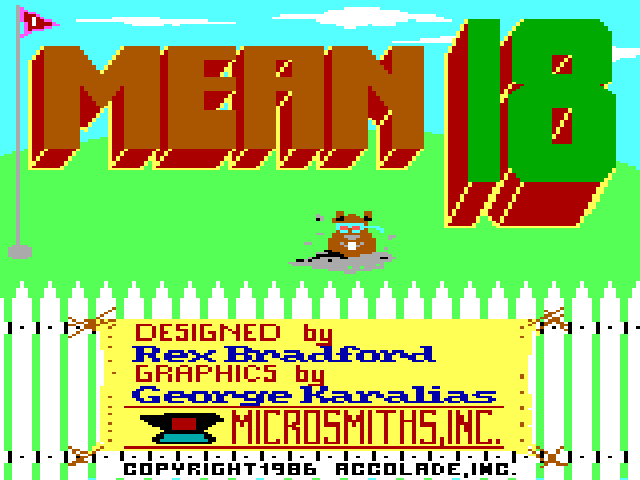
Filled‑polygon holes with hard color boundaries between fairway, rough, and green, under a horizon that is a single flat band. The game includes a course architect for building new courses.
- Opening screen: shot coming soon
Zenkokuban introduced a face graphic for each daimyo and a 50-province map of Japan, with still images or short animations for events such as typhoons, famines, and assassinations. The PC-88 displays 8 colors at 640x200.
Art drawn on the NEC PC-8801; the original runs in M88 or MAME.
- Opening screen: shot coming soon
The PC release of January 1988 shows Geoff Quilley's location paintings in EGA 640x350 16-color mode and runs as a text adventure on machines without an EGA board. The illustrations were first drawn for the 1986 Atari ST release.
Art drawn on the Atari ST; the original runs in Hatari.
- Opening screen: shot coming soon
A pseudo-3D runner drawn in the TMS9918 mode with two colors per tile strip. Sprites supply the penguin and enemies.
Art drawn on the MSX; the original runs in openMSX.
- Opening screen: shot coming soon
Brodie Lockard, who first wrote the game on PLATO, designed and programmed the July 1986 Macintosh version and shares the art credit with Don Wu; it draws the mahjong tile layout in black and white and runs on a Mac 128K. Macintosh Garden's version 2.x adds 256-color support and requires a Mac Plus.
Art drawn on the Macintosh; the original runs in Mini vMac.
- Opening screen: shot coming soon
Player and enemy craft are drawn as 3D polygons that shrink toward the top of the screen over a tilted third-person backdrop, while bullets, obstacles, explosions, and some enemies use prepared sprite patterns; the opening demo starts with a wireframe launch sequence. The PC-88 displays 8 colors at 640x200.
Art drawn on the NEC PC-8801; the original runs in M88 or MAME.
Game Arts
Nintendo eShop: Silpheed (opens in new tab)archive.org: Silpheed (opens in new tab)
craft 4popularity 46
- Opening screen: shot coming soon
AGI line‑and‑fill art whose strength is silhouette: the Arcada corridors and the Kerona desert read from shape alone, in solid fills.
Sierra On-Line
GOG: Space Quest: The Sarien Encounter (opens in new tab)in Space Quest 1+2+3
craft 3popularity 60
 (full size, opens in new tab)
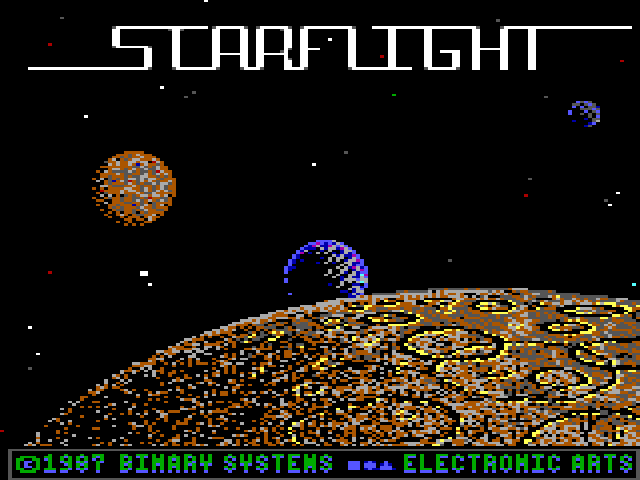
The alien communication portraits are the EGA showpiece, dithered and shaded, while the procedurally generated planet surfaces are noisy by construction. The 1986 release supported CGA, Tandy, and Hercules; EGA came with a later version built in late 1987 at the earliest.
- Opening screen: shot coming soon
Origin's Apple II rewrite of December 23, 1986 recodes the 1981 BASIC game in assembly and redraws it in hi-res: a tree, castle, lake, and sword title in green, orange, blue, violet, and white, animated overworld tiles, and monsters that wander in view. The 1987 PC port draws a second 16-color set for EGA and Tandy.
Art drawn on the Apple II; the original runs in AppleWin.
Origin Systems
archive.org: Ultima I: The First Age of Darkness (opens in new tab)GOG: Ultima I: The First Age of Darkness (opens in new tab)in Ultima 1+2+3
craft 3popularity 51
- Opening screen: shot coming soon
Uninvited was first developed in black and white for the Macintosh, with each location drawn as a still picture in the MacVenture engine's 256x171 window, and a hidden art gallery room collects extra drawings. Dave Marsh handled graphics across the series, and Mark Waterman is credited on this game and Deja Vu.
Art drawn on the Macintosh; the original runs in Mini vMac.
ICOM Simulations
Steam: Uninvited (opens in new tab)Macintosh Garden: Uninvited (opens in new tab)
craft 3popularity 43
- Opening screen: shot coming soon
The 1986 Apple II original draws each city scene in hi-res with large flat fills in one color pair: blue buildings with white outlines and orange detail against black, dithered clouds, and a small running figure for the suspect. The scenes share the 280x192 screen with the clue text and command list. The 1986 PC version renders them in CGA, with composite and Hercules output.
Art drawn on the Apple II; the original runs in AppleWin.
Brøderbund Software
archive.org (Apple II): Where in the USA Is Carmen Sandiego? (opens in new tab)archive.org (PC): Where in the USA Is Carmen Sandiego? (opens in new tab)
craft 3popularity 60
- Opening screen: shot coming soon
Six events, among them the half-pipe and surfing; the 1988 DOS version in EGA followed Epyx's 1987 Commodore 64 original.
Art drawn on the Commodore 64; the original runs in VICE.
Epyx
Steam: California Games (opens in new tab)in the Pixel Games UK multi‑platform package
craft 3popularity 51
- Opening screen: shot coming soon
Filled-polygon aircraft, buildings, and terrain over a horizon, with color used as signaling; the PC release supports CGA, EGA, and Hercules.
Lerner Research (Ned Lerner)
archive.org: Chuck Yeager's Advanced Flight Trainer (opens in new tab)
craft 2popularity 63
- Opening screen: shot coming soon
The first-person dungeon views, monsters, and interface all share one 16-color palette in the ST low-resolution mode. Andrew Jaros drew the wall textures and creatures with shading built from a few related tones.
Art drawn on the Atari ST; the original runs in Hatari.
FTL Games
archive.org (ST): Dungeon Master (opens in new tab)archive.org (PC): Dungeon Master (opens in new tab)
craft 4popularity 83
- Opening screen: shot coming soon
The play screen splits into a full-field view and a pitcher-batter close-up and uses 16 or fewer colors in each capture; the stadium title screen uses more. Each stadium is drawn to its real dimensions, including defunct parks such as Ebbets Field.
Art drawn on the Amiga; the original runs in FS‑UAE or WinUAE.
- Opening screen: shot coming soon
A vertically scrolling shooter in the ST low-resolution mode, with pixel art by Pete Lyon. Planet-surface backgrounds scroll against a fixed palette.
Art drawn on the Atari ST; the original runs in Hatari.
- Opening screen: shot coming soon
A top-down action adventure drawn in TMS9918 mode. The Master System version later reused its design with a larger palette.
Art drawn on the MSX; the original runs in openMSX.
Compile
no current release found
craft 3popularity 43
- Opening screen: shot coming soon
Bernie Drummond drew the isometric rooms and characters. Crash described the Spectrum playing areas as monochromatic, with colorful icons.
Art drawn on the ZX Spectrum; the original runs in Fuse.
Jon Ritman, Bernie Drummond
archive.org (Spectrum): Head over Heels (opens in new tab)
craft 5popularity 74
 (full size, opens in new tab)
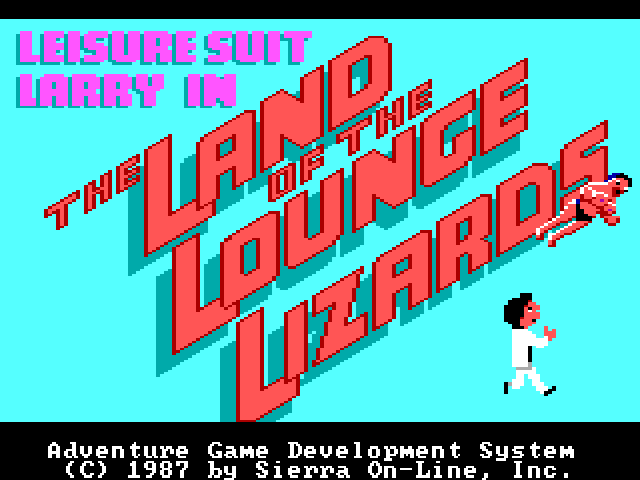
AGI vector drawings in solid 16‑color fills, lifted above average by the neon signage and the interior lighting of the bar and casino.
Sierra On-Line
GOG: Leisure Suit Larry in the Land of the Lounge Lizards (opens in new tab)in Leisure Suit Larry: Greatest Hits and Misses
craft 3popularity 68
- Opening screen: shot coming soon
Ron Gilbert and Gary Winnick's point-and-click mansion; the 1988 DOS version in EGA followed the 1987 Commodore 64 and Apple II originals.
Art drawn on the Commodore 64; the original runs in VICE.
- Opening screen: shot coming soon
The 1987 DOS original draws a classroom scene, an on-screen keyboard with ghost hands that follow the learner's typing, and a 3D typing race in CGA 320x200 with the cyan, magenta, and white palette, using dither for the sky and desk surfaces. Later Software Toolworks and Mindscape editions replaced the art with EGA, VGA, and Windows versions.
The Software Toolworks
archive.org: Mavis Beacon Teaches Typing! (opens in new tab)
craft 3popularity 85
- Opening screen: shot coming soon
An action adventure with colorful character sprites inside the fifteen fixed MSX colors. The Famicom version later redrew it.
Art drawn on the MSX; the original runs in openMSX.
- Opening screen: shot coming soon
The overhead flip-screen game is drawn for the MSX2's 16-color mode with a custom palette. Sprites carry the enemies and bullets, which the hardware limits on screen at once.
Art drawn on the MSX2; the original runs in openMSX.
Konami
Konami (Master Collection): Metal Gear (opens in new tab)GOG (PC): Metal Gear (opens in new tab)
craft 3popularity 68
- Opening screen: shot coming soon
A 1987 AGI game at 160x200 in 16 colors: flat nursery-rhyme scenes for young players, drawn with AGI's solid fills.
- Opening screen: shot coming soon
Backgrounds use TMS9918 pattern tiles limited to two colors per 8-pixel strip. Ships with a 128K ROM including the SCC chip.
Art drawn on the MSX; the original runs in openMSX.
Konami
no current release found
craft 3popularity 51
- Opening screen: shot coming soon
Flat AGI fills in solid colors for the Lytton streets and the station house.
Sierra On-Line
archive.org: Police Quest: In Pursuit of the Death Angel (opens in new tab)
craft 3popularity 43
- Opening screen: shot coming soon
ICOM's Dave Marsh and Karl Roelofs drew the rooms as black and white pixels in MacPaint, shown in the MacVenture engine's 256x171 picture window with limited animation on entering a room or acting on an object. The Macintosh release was black and white only; color came with the Amiga, Atari ST, and DOS ports.
Art drawn on the Macintosh; the original runs in Mini vMac.
ICOM Simulations
Steam: Shadowgate (opens in new tab)Macintosh Garden: Shadowgate (opens in new tab)
craft 4popularity 45
- Opening screen: shot coming soon
Michael Haire drew the 1987 Commodore 64 original's tavern scenes, portraits, sea views, and title from a redefined character set of 126 glyphs on the 16-color palette. Each picture is built from characters in place of a bitmap, and the Caribbean map is recreated from the cloth map in the box. The 1987 PC port redraws the art for CGA, EGA, and Tandy.
Art drawn on the Commodore 64; the original runs in VICE.
MicroProse
archive.org (C64): Sid Meier's Pirates! (opens in new tab)archive.org (PC): Sid Meier's Pirates! (opens in new tab)
craft 4popularity 75
- Opening screen: shot coming soon
A party-building action RPG of fifteen short scenarios. The PC-98 version is a port of the PC‑88 original.
Art drawn on the NEC PC-8801; the original runs in M88 or MAME.
- Opening screen: shot coming soon
The Labion jungle is built in layers of overlapping foliage shapes in solid fills, and the underground caves carry the same layered approach into darker interiors.
Sierra On-Line
GOG: Space Quest II: Vohaul's Revenge (opens in new tab)in Space Quest 1+2+3
craft 3popularity 60
- Opening screen: shot coming soon
A tilted 3D battlefield rendered in flat colored blocks with information panels laid over it; Ed Isenberg made the MS‑DOS version.
Intergalactic Development
archive.org: UMS: The Universal Military Simulator (opens in new tab)
craft 2popularity 46
- Opening screen: shot coming soon
The first edition draws the puzzle board, wheel, and three contestants in 320x200 four-color CGA, with three rounds and a bonus round; no EGA or Tandy mode is listed for it.
- Opening screen: shot coming soon
An action RPG in which the player bumps into enemies to fight. Its original release is for the PC‑8801.
Art drawn on the NEC PC-8801; the original runs in M88 or MAME.
Nihon Falcom
Nintendo eShop (PC-88): Ys I: Ancient Ys Vanished (opens in new tab)
craft 3popularity 80
 (full size, opens in new tab)
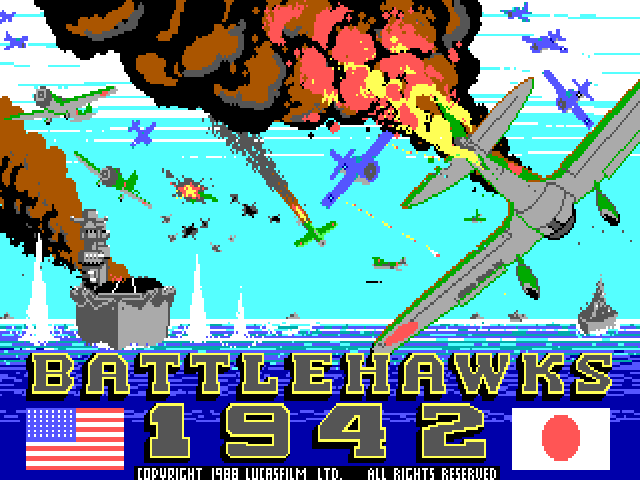
Scaled‑bitmap aircraft over a solid blue Pacific. Its VGA option is a 320x200 16‑color mode, not 256 colors.
 (full size, opens in new tab)
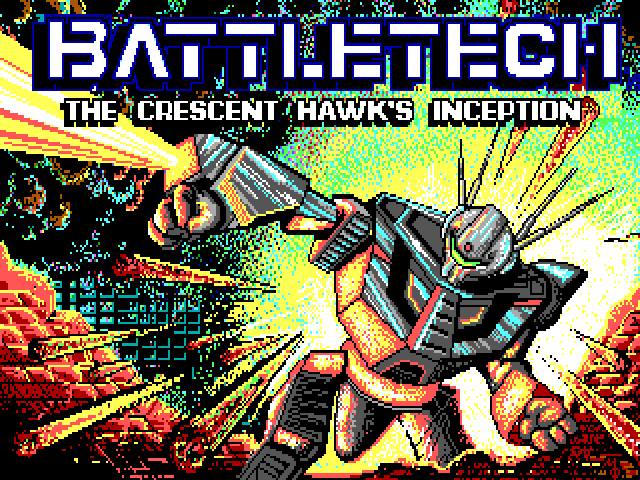
Overhead tile world in a restrained industrial palette, with larger hand‑drawn mech and character panels in the cutscenes where the dithering does some modeling.
Westwood Associates
archive.org: BattleTech: The Crescent Hawk's Inception (opens in new tab)
craft 3popularity 43
- Opening screen: shot coming soon
The DOS version keeps the fractal planet flyovers of the 1988 Atari ST original; the archive copy ships CGA and EGA asset sets.
Art drawn on the Atari ST; the original runs in Hatari.
- Opening screen: shot coming soon
Flat-shaded solid 3D islands and sea, converted from Realtime Games' 1988 Atari ST original; the MS-DOS version followed in 1989.
Art drawn on the Atari ST; the original runs in Hatari.
 (full size, opens in new tab)
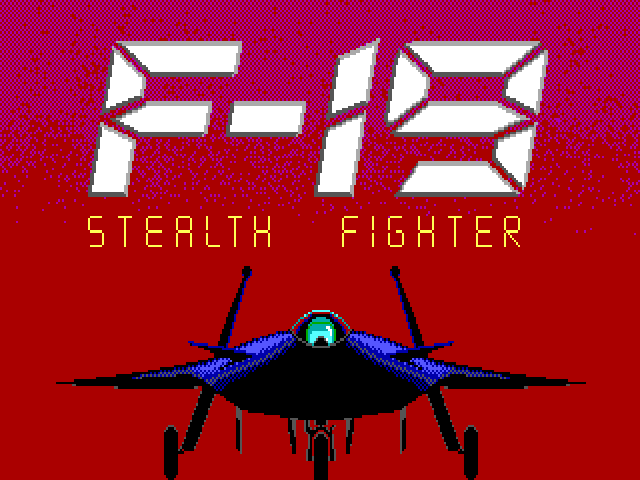
Solid‑filled polygon terrain with dithered horizon banding, seen through a detailed 16‑color cockpit panel.
 (full size, opens in new tab)
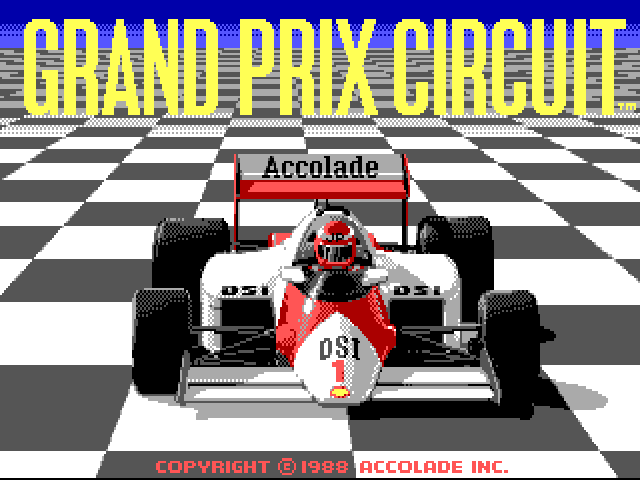
Dithered sky bands above the horizon and a detailed cockpit view, with the DOS release shipping a separate EGA executable alongside the CGA one.
- Opening screen: shot coming soon
A hole map shown beside the play view; the Accolade DOS release supports EGA.
Art drawn on the Commodore 64 and MS-DOS together; the original runs in VICE.
Sculptured Software
archive.org: Jack Nicklaus' Greatest 18 Holes of Major Championship Golf (opens in new tab)
craft 2popularity 52
- Opening screen: shot coming soon
Sierra's first SCI game, with dithered dawn and dusk skies, water reflections, and a haunted‑house interior built from the 16‑color palette.
Sierra On-Line
GOG: King's Quest IV: The Perils of Rosella (opens in new tab)in King's Quest 4+5+6
craft 5popularity 63
- Opening screen: shot coming soon
A puzzle platformer with pyramid-themed tiles. The MSX2 version recolors some items and backgrounds.
Art drawn on the MSX; the original runs in openMSX.
Konami
no current release found
craft 3popularity 43
- Opening screen: shot coming soon
SCI0 at 320x200 in the 16 EGA colors, with airport, cruise ship, and jungle screens that push cyan and magenta hard for comic brightness.
Sierra On-Line
GOG: Leisure Suit Larry Goes Looking for Love (in Several Wrong Places) (opens in new tab)in Leisure Suit Larry: Greatest Hits and Misses
craft 3popularity 57
 (full size, opens in new tab)
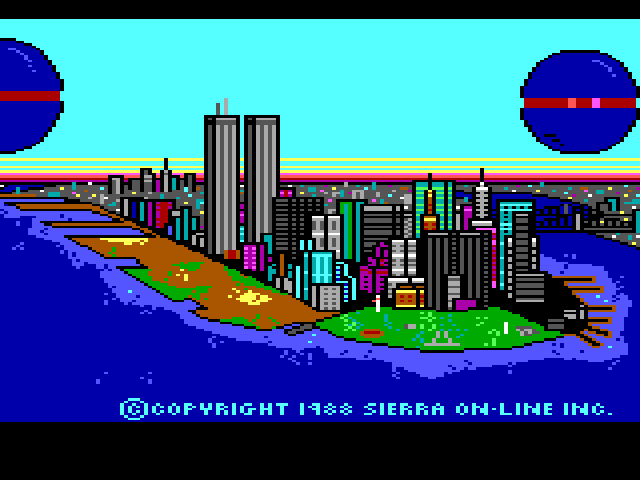
Evryware's AGI game holds a red‑orange sky over near‑black, boarded‑up Manhattan, using the EGA palette outside its comfortable range to keep everything grotesque and airless.
- Opening screen: shot coming soon
A first-person 16-color dungeon view; the 1988 DOS version supports EGA and preceded the 1990 Amiga version.
New World Computing
GOG: Might and Magic II: Gates to Another World (opens in new tab)in Might and Magic 6‑pack
craft 2popularity 46
- Opening screen: shot coming soon
A parody shooter with colorful characters kept within MSX1 sprite and strip limits. Backgrounds are tile‑based.
Art drawn on the MSX; the original runs in openMSX.
Konami
no current release found
craft 3popularity 51
- Opening screen: shot coming soon
Sierra SCI0 art authored in 16 colors, with dithered sky and pavement gradients over backgrounds that are largely flat blue‑gray parking lots, offices, and roadsides.
Sierra On-Line
GOG: Police Quest II: The Vengeance of Sonny Bonds (opens in new tab)Steam: Police Quest II: The Vengeance of Sonny Bonds (opens in new tab)in Police Quest Collection
craft 3popularity 51
- Opening screen: shot coming soon
Gold Box combat on a small tile set, with monster portraits adapted from the Monster Manual artwork; the DOS version supports EGA.
Art drawn on the Commodore 64; the original runs in VICE.
Strategic Simulations, Inc.
GOG: Pool of Radiance (opens in new tab)in Forgotten Realms: The Archives, Collection Two
craft 3popularity 66
- Opening screen: shot coming soon
Spectrum HoloByte's 1988 release of Alexey Pajitnov's game frames the well with painted Soviet scenes, among them a cosmonaut, rendered in the EGA palette. It was the first commercial Tetris release in the United States.
- Opening screen: shot coming soon
The overhead rink, skaters, scoreboard sequences, and Zamboni use 16 colors; the title screen is a digitized photograph in a higher-color mode. Team colors are user-selectable, and the box copy advertises digitized fight footage.
Art drawn on the Amiga; the original runs in FS‑UAE or WinUAE.
- Opening screen: shot coming soon
The left of the screen shows a cartoon landmark for the current country while the right carries the clue text and menus. The PC version draws these scenes in EGA or Tandy 16-color mode and reduces them to four colors on CGA.
Broderbund Software
archive.org: Where in Europe Is Carmen Sandiego? (opens in new tab)
craft 3popularity 52
- Opening screen: shot coming soon
The isometric landscape of rocks, trees, and undergrowth is drawn in monochrome. The Games Machine said color would only distract, and C&VG called the game entirely monochromatic.
Art drawn on the ZX Spectrum; the original runs in Fuse.
- Opening screen: shot coming soon
Each hole is drawn as a 16-color landscape. The PC release followed the 1987 Commodore 64 original, and the archive description says the PC courses are more complex.
- Opening screen: shot coming soon
The first Bitmap Brothers game uses the ST low-resolution mode for a metallic, shaded look on a vertically scrolling stage.
Art drawn on the Atari ST; the original runs in Hatari.
The Bitmap Brothers
archive.org (ST): Xenon (opens in new tab)archive.org (PC): Xenon (opens in new tab)
craft 4popularity 63
- Opening screen: shot coming soon
Continues Ys I on the same PC‑88 engine.
Art drawn on the NEC PC-8801; the original runs in M88 or MAME.
Nihon Falcom
Project EGG (PC-88): Ys II: Ancient Ys Vanished - The Final Chapter (opens in new tab)
craft 3popularity 80
 (full size, opens in new tab)
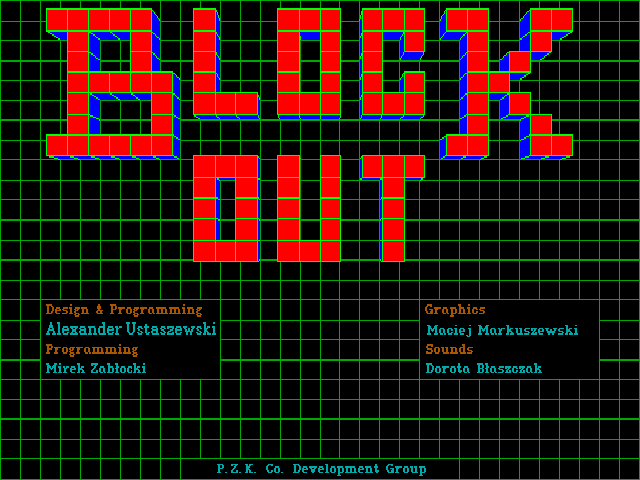
3D Tetris in a pit seen from above: each piece falls as a wireframe and fills with flat color once placed, and each settled layer takes a different color to mark its depth, with no authored artwork beyond that.
- Opening screen: shot coming soon
In the 320x190 SCI0 picture area, ordered dithering in two‑color pairs draws the wood grain, wallpaper, and shadow of the lamp‑lit plantation interiors, and value carries the mood more than hue does.
- Opening screen: shot coming soon
Gold Box house style with flat combat tiles; the DOS version is drawn in 16 colors and launched alongside the Apple II and Commodore 64 versions in 1989.
Strategic Simulations, Inc.
GOG: Curse of the Azure Bonds (opens in new tab)in Forgotten Realms: The Archives, Collection Two
craft 3popularity 43
- Opening screen: shot coming soon
Visionary Design Technologies redrew Don Bluth's laserdisc animation as 16-color frames with black outlines and flat fills, cutting scenes to fit floppy disks. The Atari ST version followed in 1990; a Commodore User review credits compressing 130 megabytes of source material into the game.
Art drawn on the Amiga; the original runs in FS‑UAE or WinUAE.
- Opening screen: shot coming soon
Filled-polygon 3D flight with a small color set; reviewed for the PC and the Atari ST together in early 1989, with EGA and Tandy install options.
- Opening screen: shot coming soon
A NATO‑symbology chart in 16 colors, with cyan sea, thin coastline vectors, unit counters, and menu text.
 (full size, opens in new tab)
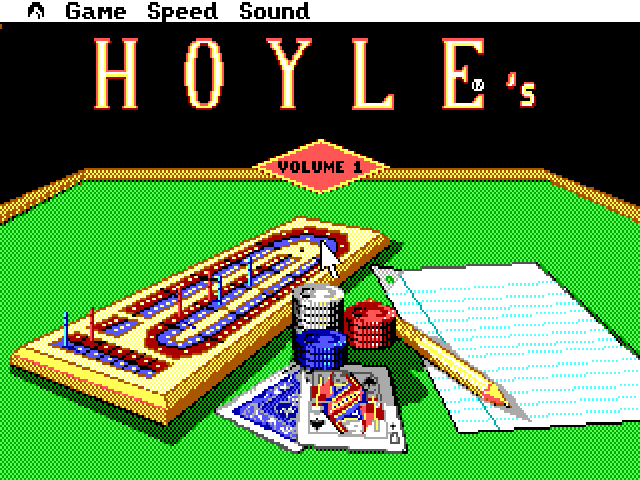
An SCI0 EGA card table with dithered felt, and opponents drawn mostly from Sierra game characters such as Larry, King Graham, Rosella, and Roger Wilco, each with idle animation and a legible expression at portrait size.
Sierra On-Line
archive.org: Hoyle's Official Book of Games: Volume 1 (opens in new tab)
craft 3popularity 52
 (full size, opens in new tab)
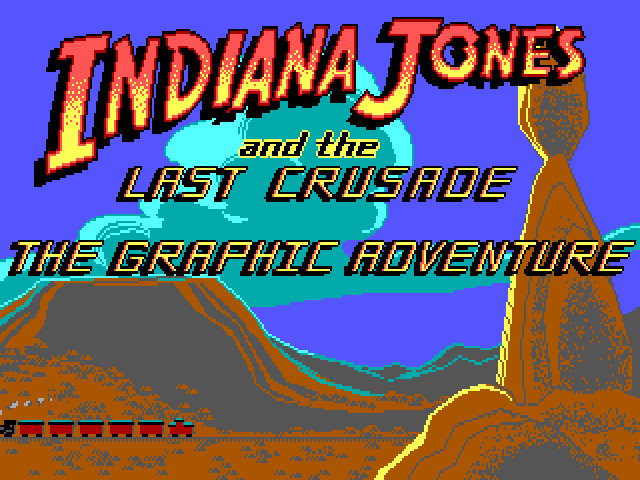
EGA scene painting: the Venice catacombs build stone and torchlight from dither gradients, the zeppelin interior gets the same care, and the character sprites keep clear silhouettes.
Lucasfilm Games
archive.org: Indiana Jones and the Last Crusade: The Graphic Adventure (opens in new tab)
craft 4popularity 63
 (full size, opens in new tab)
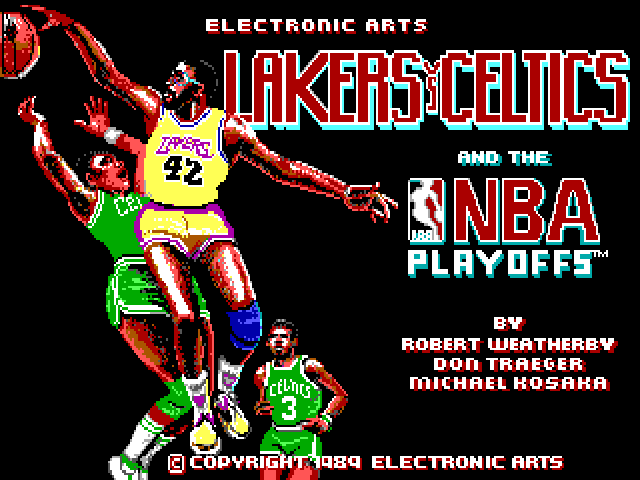
The court, crowd band, and player sprites are drawn in 16 colors, and the run and dunk animation cycles keep team uniforms distinguishable at sprite size.
Electronic Arts
archive.org: Lakers versus Celtics and the NBA Playoffs (opens in new tab)
craft 3popularity 43
- Opening screen: shot coming soon
An SCI0 Larry in the 16 EGA colors, with island resort, casino, and jungle screens using long dither gradients for sky and water where the AGI original used flat fills.
Sierra On-Line
GOG: Leisure Suit Larry III: Passionate Patti in Pursuit of the Pulsating Pectorals (opens in new tab)in Leisure Suit Larry: Greatest Hits and Misses
craft 3popularity 60
 (full size, opens in new tab)
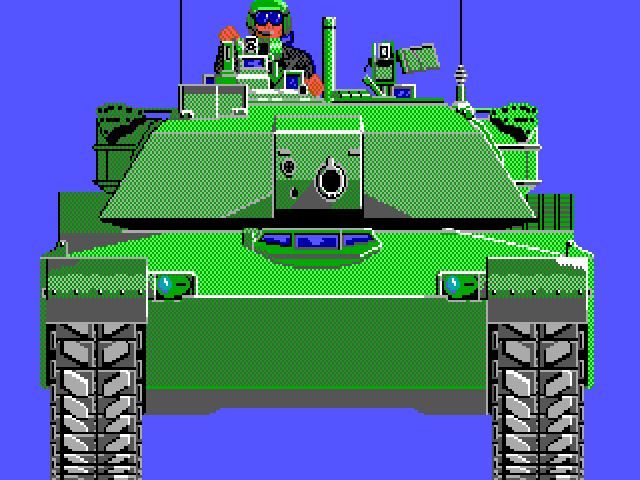
In EGA the sim draws flat‑shaded polygon vehicles over a bare horizon, and the tactical map uses solid fills with no dithering.
 (full size, opens in new tab)
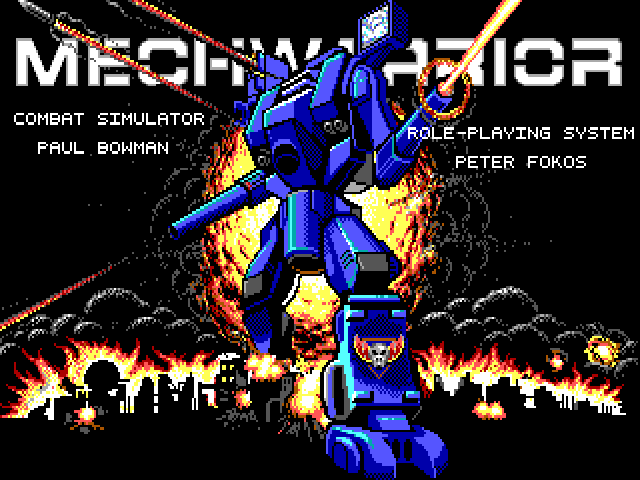
A sparse flat‑shaded 3D view with few polygons behind a static cockpit frame; the between‑mission portrait screens hold more visual interest than the combat does.
- Opening screen: shot coming soon
A filled, shaded polygon snowscape and hand-drawn portraits for the 32 recruitable characters; the DOS version followed the 1989 Atari ST original and supports EGA and VGA.
Art drawn on the Atari ST; the original runs in Hatari.
- Opening screen: shot coming soon
Bold 16-color flats with hard outlines carried over from the Les Tuniques Bleues comic; first on the Amiga and Atari ST in September 1989.
Art drawn on the Amiga and Atari ST; the original runs in Hatari for the ST version.
- Opening screen: shot coming soon
A pipe grid in primary colors where green flooz flows through the pieces you lay; released for the Amiga, Atari ST, and DOS together in 1989.
Art drawn on the Atari ST, Amiga, and DOS together; the original runs in Hatari for the ST version.
- Opening screen: shot coming soon
Glenn Corpes's isometric landscape blocks and small walker sprites use one 16-color palette in play; the title screen uses more colors. The Atari ST version followed in April 1989.
Art drawn on the Amiga; the original runs in FS‑UAE or WinUAE.
Bullfrog Productions
archive.org (Amiga): Populous (opens in new tab)GOG (PC): Populous (opens in new tab)
craft 3popularity 75
- Opening screen: shot coming soon
SCI0 EGA with dense dithering in the forest canopy and across the Spielburg valley, and day and night views of the same locations.
Sierra On-Line
GOG: Quest for Glory: So You Want to Be a Hero (opens in new tab)in Quest for Glory 1‑5
craft 5popularity 57
- Opening screen: shot coming soon
A submarine simulation played from instrument panels, a sonar trace, and a North Atlantic map, with the 16 colors encoding data; the 1989 DOS version followed the 1988 Commodore 64 release.
- Opening screen: shot coming soon
The temple, Nazi base, and missile-silo tilesets use one 16-color palette on a 256-pixel-wide playfield. The graphics were drawn for the Atari ST and Amiga first and converted down to the 8‑bit machines.
Art drawn on the Amiga and Atari ST; the original runs in FS‑UAE or WinUAE.
- Opening screen: shot coming soon
The city view uses 16 colors for zone tiles, roads, and the map, with the pointer as a separate hardware sprite. Version 2.0 for 1 MB Amigas added Extra Half-Brite tilesets with up to 64 colors; the Macintosh version released the same month is monochrome.
Art drawn on the Amiga; the original runs in FS‑UAE or WinUAE.
Maxis
archive.org (Amiga): SimCity (opens in new tab)archive.org (PC): SimCity (opens in new tab)
craft 2popularity 100
- Opening screen: shot coming soon
Stages scroll in several directions in the V9938 tile mode, with a Konami sprite driver raising the sprite count to 64. Bosses are large and built from many sprites.
Art drawn on the MSX2; the original runs in openMSX.
- Opening screen: shot coming soon
Mark Crowe's alien vistas: the garbage freighter, the Pestulon exterior, and the Monolith Burger interior each build their light from dither gradients within the 16‑color palette.
Sierra On-Line
GOG: Space Quest III: The Pirates of Pestulon (opens in new tab)in Space Quest 1+2+3
craft 5popularity 63
- Opening screen: shot coming soon
Continues the series' EGA look: dithered planet surfaces seen from orbit, a color‑coded starmap, and alien communication portraits drawn with two‑color blends inside the 16‑color limit.
Binary Systems
GOG: Starflight 2: Trade Routes of the Cloud Nebula (opens in new tab)in Starflight 1+2
craft 3popularity 46
- Opening screen: shot coming soon
Side-view cars drawn in 16 colors, with drive-in, junkyard, and engine-bay screens. The 2014 freeware re-release is the official download.
- Opening screen: shot coming soon
Geoff Crammond's elevated tracks in filled 3D; the EGA build runs at lower detail than the 16-bit versions. Tim Ansell made the DOS version, archived under its US title, Stunt Track Racer.
Art drawn on the Amiga and Atari ST; the original runs in Hatari for the ST version.
 (full size, opens in new tab)
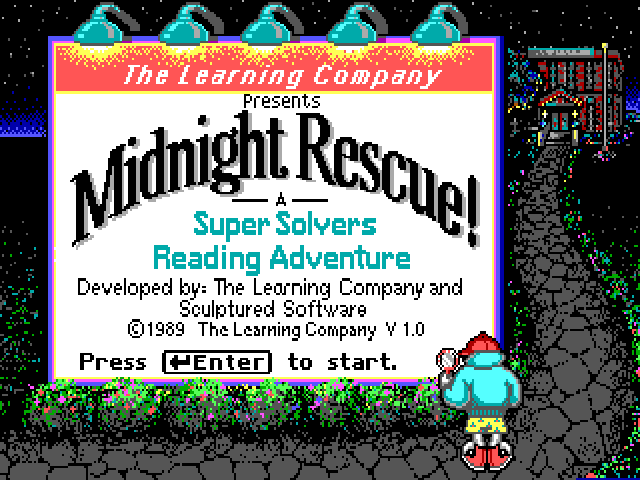
Bright flat‑color school corridors with clean outlines and readable robot sprites; there is barely any dithering, and the palette keeps the reading‑comprehension text overlay legible.
The Learning Company
archive.org: Super Solvers: Midnight Rescue! (opens in new tab)
craft 3popularity 52
- Opening screen: shot coming soon
Each of the two cars, the Ferrari F40 and the Porsche 959, has its own dashboard file, and the install launches a dedicated EGA executable.
 (full size, opens in new tab)
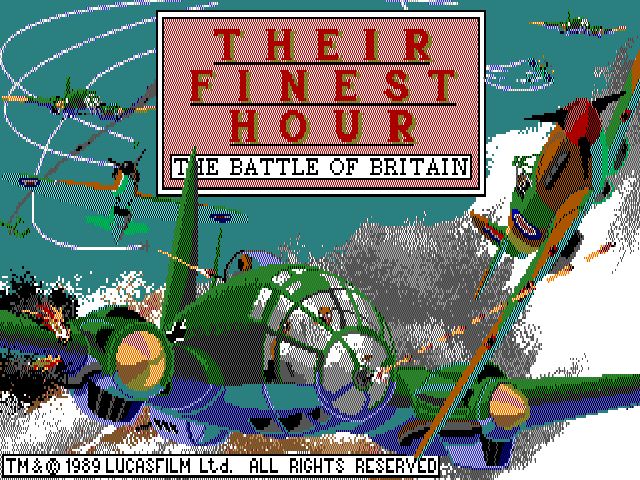
Flat‑shaded Spitfires and Heinkels over a clean two‑tone sky, with a combat film recorder for replaying missions.
Lucasfilm Games
archive.org: Their Finest Hour: The Battle of Britain (opens in new tab)
craft 3popularity 46
- Opening screen: shot coming soon
Gold Box art in 16 colors by Tom Wahl, rated by reviewers as on par with Secret of the Silver Blades; the DOS version tops out at EGA.
Strategic Simulations, Inc.
GOG: Champions of Krynn (opens in new tab)in Dungeons & Dragons: Krynn Series
craft 3popularity 43
 (full size, opens in new tab)
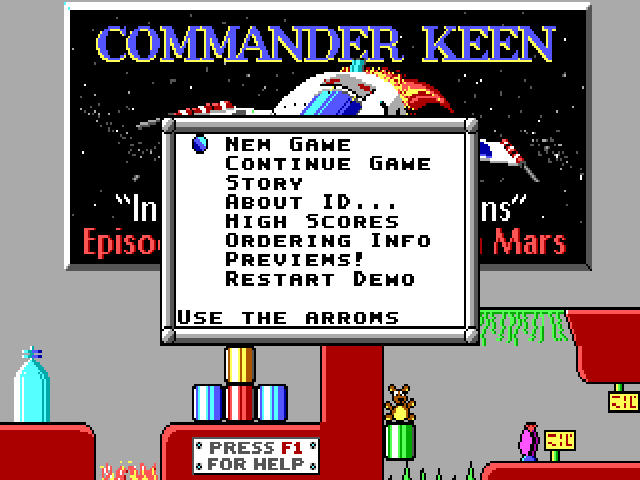
The pixel art is simple cartoon shapes; the feat is smooth full‑screen side‑scrolling on EGA through adaptive tile refresh, a technique id Software built so a PC could scroll like a console.
id Software
GOG: Commander Keen in Invasion of the Vorticons (opens in new tab)in Commander Keen Complete Pack
craft 3popularity 72
 (full size, opens in new tab)
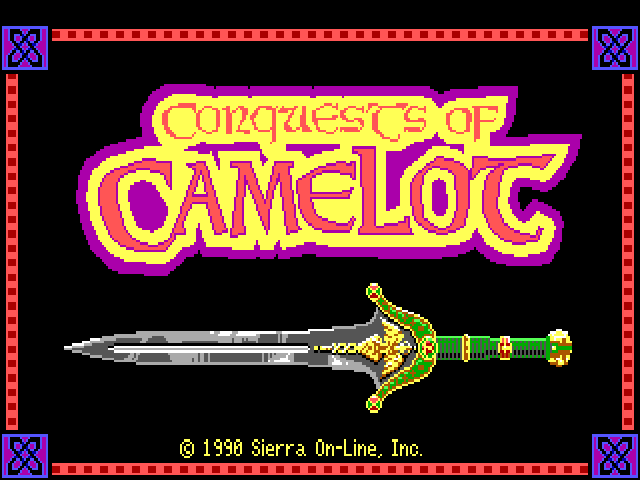
One of the last SCI0 games, with dense dithered backgrounds: the Jerusalem bazaar, the desert crossing from Gaza, and the Grail approach get near‑painted blends out of 16 fixed colors.
Sierra On-Line
GOG: Conquests of Camelot: The Search for the Grail (opens in new tab)
craft 4popularity 43
 (full size, opens in new tab)
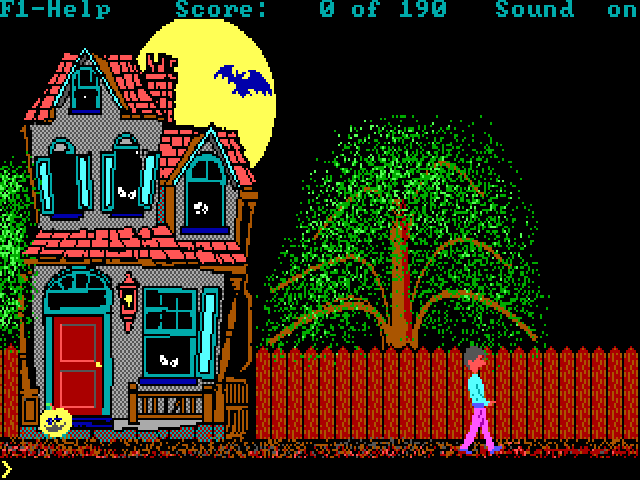
Flat, poster‑paint rooms with wobbly perspective and almost no dithering, drawn by a single developer for a shareware release.
- Opening screen: shot coming soon
A top-down pitch with small player sprites drawn for speed; the DOS version followed the 1990 Amiga and Atari ST originals.
Art drawn on the Amiga and Atari ST; the original runs in Hatari for the ST version.
- Opening screen: shot coming soon
Bright continent tiles and creature portraits; released for the Apple II and the IBM PC together in mid-1990. The Amiga graphics were redone later.
 (full size, opens in new tab)
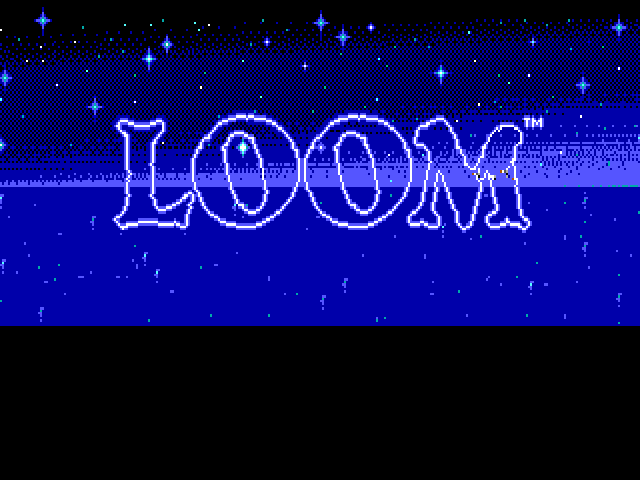
Mark Ferrari's dithering builds gradient skies, fog, and water from interleaved 16‑color pixels that resolve into continuous tone at normal viewing distance.
- Opening screen: shot coming soon
Character portraits modeled on film actors are drawn for the MSX2's 16-color palette. The cartridge also carries Konami's SCC sound chip.
Art drawn on the MSX2; the original runs in openMSX.
- Opening screen: shot coming soon
The game draws in CGA mode 04h, 320 by 200 pixels in four colors, on the FAST (Fluid Animation Software Technology) engine. Computer Gaming World praised its animation and level design.
- Opening screen: shot coming soon
Sierra's SCI0 EGA near its ceiling: Shapeir's tiled architecture uses repeated ornamental motifs without going noisy, and the desert screens carry sunset and dune gradients built from careful dithering.
Sierra On-Line
GOG: Quest for Glory II: Trial by Fire (opens in new tab)in Quest for Glory 1‑5
craft 4popularity 54
- Opening screen: shot coming soon
The RPG redraws the Snatcher cast as small deformed sprites in a 16-color MSX2 palette. It shipped on a cartridge with the SCC sound chip.
Art drawn on the MSX2; the original runs in openMSX.
Konami
no current release found
craft 4popularity 45
 (full size, opens in new tab)
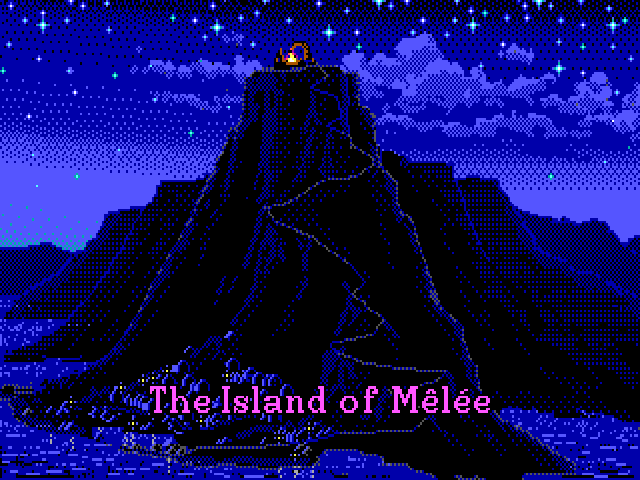
Mark Ferrari's hand‑placed dithering turns 16 colors into skies, water, and jungle that read as continuous tone. This EGA release came out in October 1990, before the 256‑color VGA version.
 (full size, opens in new tab)
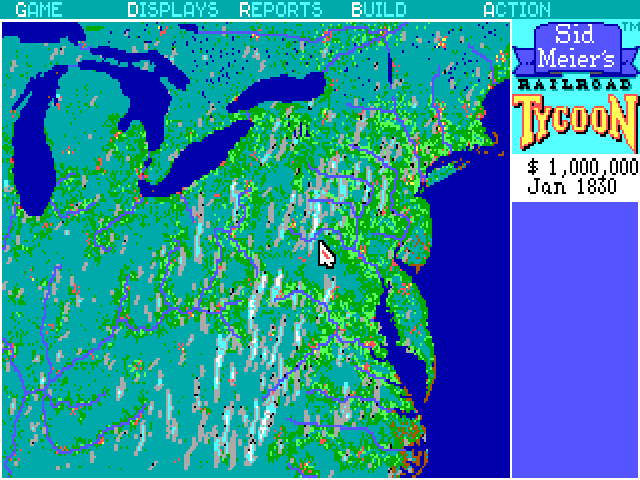
Side‑view locomotive portraits and station scenes are dithered for metal and steam, and the scrolling map keeps a small palette so track stays distinct from terrain.
 (full size, opens in new tab)
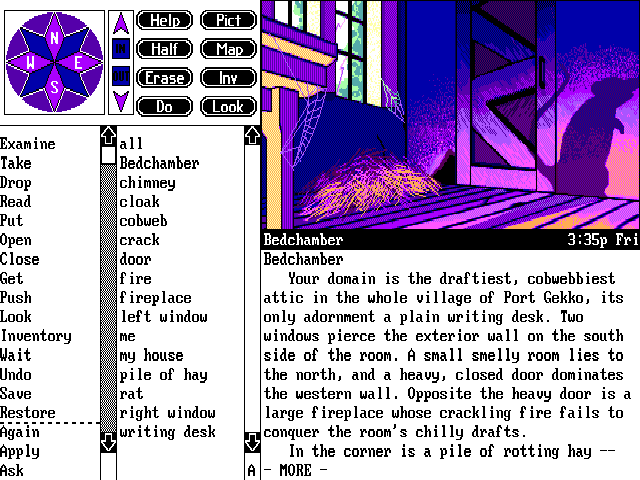
Legend drew its illustrations for EGA's 640x350 16‑color mode, so the Sorcerer University scenes have twice the horizontal resolution of standard 320x200 EGA games and fine dithered shading.
Legend Entertainment
GOG: Spellcasting 101: Sorcerers Get All the Girls (opens in new tab)in Spellcasting 1+2+3
craft 3popularity 43
 (full size, opens in new tab)
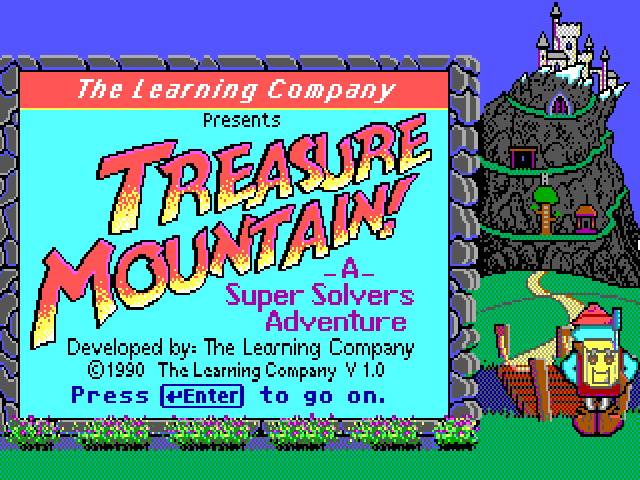
Layered mountainside backdrops with dithered rock faces and a warm brown‑green palette held consistently across the climb.
The Learning Company
archive.org: Super Solvers: Treasure Mountain! (opens in new tab)
craft 3popularity 60
- Opening screen: shot coming soon
The game is played on a 16-color map of Illuria; Greame Whittle is the credited artist. The Amiga and DOS versions are both dated 1990.
- Opening screen: shot coming soon
The first Wizardry with EGA graphics, with hand‑drawn monster illustrations in dithered shading above an otherwise plain line‑drawn dungeon view.
Sir-Tech Software
GOG: Wizardry VI: Bane of the Cosmic Forge (opens in new tab)Steam: Wizardry VI: Bane of the Cosmic Forge (opens in new tab)in Wizardry 6+7
craft 3popularity 46
- Opening screen: shot coming soon
Flat-shaded vector polygons are drawn on a 16-color palette, with several palettes swapped in for fades and scene changes. Eric Chahi rotoscoped and hand-built the shapes, and limited colors give each scene a single dominant hue.
Art drawn on the Amiga; the original runs in FS‑UAE or WinUAE.
Delphine Software
GOG (20th Anniversary Edition): Another World (opens in new tab)Steam (20th Anniversary Edition): Another World (opens in new tab)
craft 5popularity 74
- Opening screen: shot coming soon
Four-color CGA screens on the FAST engine shared with Pharaoh's Tomb, drawn by George Broussard, across four volumes of twenty levels; Home of the Underdogs calls the graphics adequate given CGA's limit. Released as freeware on March 20, 2009.
- Opening screen: shot coming soon
A mouse-driven top-down dungeon crawler with more than 40 floors, drawn for the PC‑98.
Art drawn on the NEC PC-9801; the original runs in Neko Project II.
- Opening screen: shot coming soon
The first id game with texture-mapped walls, drawn in 16-color EGA, and the first to show the player's hand in the view; Adrian Carmack drew the enemies. The engine was extended for Wolfenstein 3D.
- Opening screen: shot coming soon
Uses a modified Goodbye, Galaxy engine with 16-color EGA art and the series' first music, composed by Robert Prince. FormGen sold it at retail with a five-level demo; a CGA version was also made.
id Software
archive.org: Commander Keen in Aliens Ate My Babysitter! (opens in new tab)
craft 4popularity 51
- Opening screen: shot coming soon
Adrian Carmack's tilesets fill the screen with dithered cave and pyramid backdrops that read as texture, and with saturated foliage on Gnosticus IV. Background and foreground scroll at the same rate, with no parallax layer.
id Software
GOG: Commander Keen in Goodbye, Galaxy (opens in new tab)in Commander Keen Complete Pack
craft 4popularity 63
- Opening screen: shot coming soon
Sixteen-color EGA tiles draw platforms from slightly above for a pseudo-3D effect, a refined form of the Keen Dreams graphics update, with fireman's poles and a between-level map. A four-color CGA edition was sold alongside the EGA game.
id Software
Steam: Commander Keen in Goodbye, Galaxy: Secret of the Oracle (opens in new tab)
craft 5popularity 72
- Opening screen: shot coming soon
Shares the Goodbye, Galaxy engine and 16-color EGA tile conventions with Secret of the Oracle and was released with it on December 15, 1991 as the registered episode. A CGA edition of both episodes was also sold.
id Software
Steam: Commander Keen in Goodbye, Galaxy: The Armageddon Machine (opens in new tab)
craft 4popularity 54
- Opening screen: shot coming soon
Prototyped the pseudo-3D view, ramps, and sound card support later refined in Goodbye, Galaxy; Keen, in pajamas, throws seeds that turn enemies into flowers. Built for 16-color EGA with a separate CGA build selected by a compile constant.
- Opening screen: shot coming soon
Sixteen-color EGA cave tiles and small sprites, most drawn by Frank Maddin, with each of the three episodes using its own graphics set. Apogee's 1993 order form describes it as similar to Commander Keen in style and action.
- Opening screen: shot coming soon
Built on the Shadow Knights engine with 16-color EGA tiles, art by Adrian Carmack and Jerry Jones; Dave carries a shotgun through eight side-view mansion levels of monsters. Froggman reissued it in 1993 as Rooms of Doom.
id Software (Gamer's Edge)
archive.org: Dangerous Dave in the Haunted Mansion (opens in new tab)
craft 3popularity 48
- Opening screen: shot coming soon
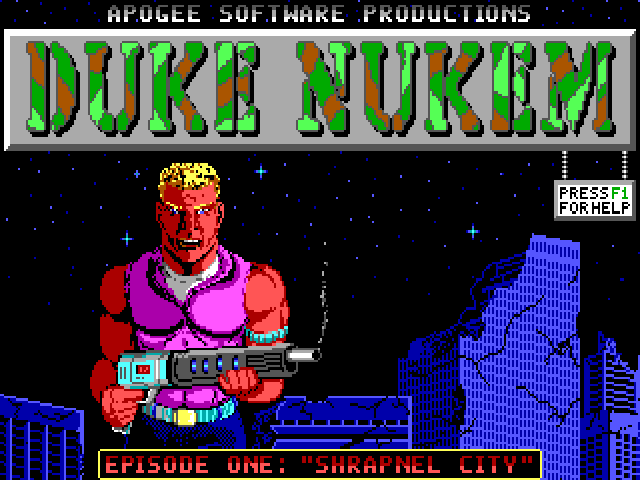
An EGA side-scroller with art and levels by Allen H. Blum III, released February 1991 in three volumes; Apogee's freeware notes call it the first shareware game with AdLib music. RGB Classic Games describes the look as primitive.
 (full size, opens in new tab)
Clean, readable EGA platform tiles with hard‑edged neon accents on the lab and city sets; the sprites are chunky, and flat fills carry the look, with little dithering. The archive.org item holds the shareware first episode.
- Opening screen: shot coming soon
Walls are solid-colored trapezoids without textures, and enemies are 2D sprites scaled by distance, all within 16 EGA colors. Adrian Carmack drew the mutants and tentacled flying saucers.
- Opening screen: shot coming soon
The playfield runs in 16 colors with Scott Johnson's rock, earth, and crystal tilesets and Gary Timmons's three-color lemming animations; the skill panel below uses a separate palette. The lemming green, blue, and white were chosen with the PC EGA palette in mind.
Art drawn on the Amiga; the original runs in FS‑UAE or WinUAE.
DMA Design
archive.org (Amiga): Lemmings (opens in new tab)archive.org (PC): Lemmings (opens in new tab)
craft 4popularity 83
- Opening screen: shot coming soon
A Robotron-style arena shooter in the ST low-resolution mode, where many small sprites in few colors crowd the screen.
Art drawn on the Atari ST; the original runs in Hatari.
Jeff Minter (Llamasoft)
Atarimania (ST): Llamatron: 2112 (opens in new tab)archive.org (PC): Llamatron: 2112 (opens in new tab)
craft 3popularity 42
- Opening screen: shot coming soon
Gold Box art adapted for an online service: the 16‑color dungeon views and portraits of SSI's single‑player games, with chat and party information around the frame. The archived copy is an offline build with the online code removed.
- Opening screen: shot coming soon
Fixed-screen tile puzzles inside an Aztec pyramid, drawn for 16-color EGA with a CGA mode; snakes spit venom at anyone passing beside them, spiders kill on contact, and boulders are pushed Sokoban-style. Three episodes, the first shareware.
- Opening screen: shot coming soon
A Titus platformer drawn as a 16-color cartoon: flip screens with no scrolling across grassy plains, frozen valleys, forest, and volcanic caves, with a caveman who swings a club.
Art drawn on the Atari ST and Amiga; the original runs in Hatari for the ST version.
 (full size, opens in new tab)
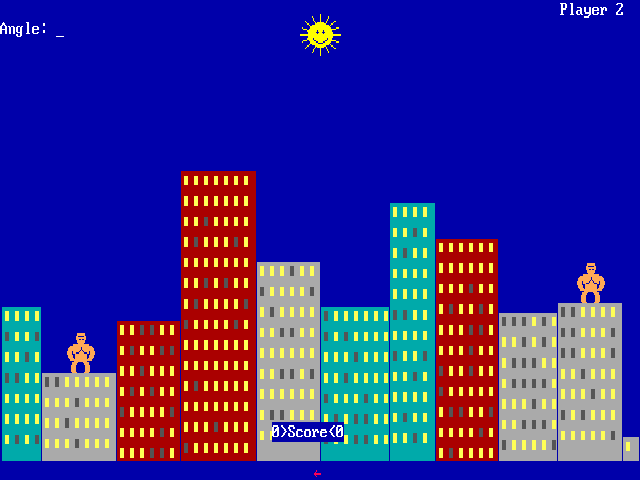
SCREEN 9 primitives at 640x350: rectangles for buildings, a filled‑circle sun with a face, and two gorillas built from filled boxes and circle arcs, all with no dithering.
- Opening screen: shot coming soon
A 30-level robot maze puzzle game designed by Tom Hall with 16-color EGA art by Adrian Carmack; the shareware release holds the first 10 levels. Its code grew out of id's aborted Super Mario Bros. 3 port.
- Opening screen: shot coming soon
A side-view ninja game in 16-color EGA with village, cemetery, and castle levels; IGN wrote that it does not look as pretty as Commander Keen, and Kotaku summarized it as 'id does Shinobi'. Froggman reissued it in 1993 as Budo.